

Carnosine or Beta-Alanine: Which Should You Actually Supplement With?
Carnosine vs beta-alanine comes down to one core distinction: one is the finished molecule, the…

Written by: Nicole Stout
As a world class judo athlete and the reigning national champion for the last two years, I am constantly focusing on improving my recovery routine. According to the Journal of Community Medicine and Health Education, 69.4% of professional judo players suffer from some form of recurring injury. The most common of which being shoulder related followed closely by knee injuries.
Like many high-level judo players, I feel plagued by all the above. I have broken countless fingers and toes, dislocated the same elbow twice, had ACL surgery 7 years ago, a recurring rotator cuff injury, a broken foot that has not healed despite it being broken years ago, and a recurring torn meniscus.
Judo is a brutal sport and unfortunately it takes a long time to reach the highest level. It took a friend of mine over 15 years competing at the highest level before finally qualifying for her first Olympics. Most judo players will invest anywhere from 5 to 20 years in the sport without realizing an Olympic dream, yet still having fantastic careers.
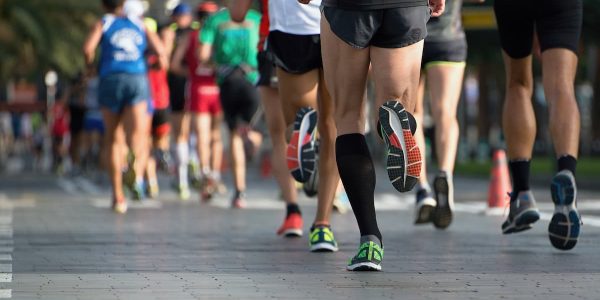
This makes it feel like I am partaking in a physically arduous marathon over the course of my entire career. The length of the marathon is entirely determined by how long I can keep my body together and continue forging down the path. I give myself the best possible chance of this by optimizing my rest and recovery phase.
I focus on ‘active recovery’ and supplementation. Active recovery is great for injury prevention and includes stretching, seeing a physical therapist who helps work on my mobility and joint stability, and being a regular customer at my local massage place. In terms of stretches, I focus on my hips by performing very deep squats and holding–like my favorite sumo players. I do some lunges and pike positions for my legs, and then I do some overhead stretches for my arms/shoulders. I try to do this 15 minutes before judo practice starts, especially when it is cold because I have Raynaud’s syndrome which causes my extremities to go numb in the cold and the stretching also helps prevent pulled muscles.
In terms of supplementation for my recovery, I use creatine, glucosamine chondroitin, and SR CarnoSyn® beta-alanine.
I take 6.4g of SR CarnoSyn® a day and I make sure to use the sustained release tablets because otherwise I get the fun side effect of feeling very itchy because of all the beta-alanine hitting my system all at once. The sustained release delivery system allows me to take higher levels of beta-alanine comfortably and with extended absorption. And as a result, I can recover faster at practice and in matches.
This is certainly not a complete list of all the supplements that I take, but they are the ones that I think are most beneficial in terms of recovery specific needs. If you are looking to improve your overall recovery and therefore your fitness, consider adding my recovery techniques and SR CarnoSyn® beta-alanine to your daily regimen. SR CarnoSyn® has helped me be a better athlete, let it do the same for you.
Carnosine vs beta-alanine comes down to one core distinction: one is the finished molecule, the…
Beta-alanine sustained release refers to a delivery system that slows how quickly beta-alanine enters the…

Carnosine food sources are limited almost entirely to animal muscle tissue, since the dipeptide is…

Is beta-alanine a stimulant in the same category as caffeine or synephrine? No. CarnoSyn® beta-alanine…





Give Your Brand the Edge with CarnoSyn® Brands
Add proven performance benefits to your product. Contact us below to find out more about CarnoSyn®, SR CarnoSyn®, CarnoSyn® 4X, and TriBsyn®.
Contact UsCarnoSyn® Brands eBook